


Shoulder replacement
Shoulder, elbow & hand surgery
Shoulder · elbow · hand · 어깨
Where the shoulder is severely damaged by fracture, rotator cuff tear or arthritis, the damaged joint is replaced with an implant. The design of implant is chosen according to how much tendon remains, with the twin goals of restoring range of motion and a daily life without pain.
Anesthesia, hospital stay and recovery time depend on the extent of injury and your general condition. The operating surgeon explains this after the consultation.
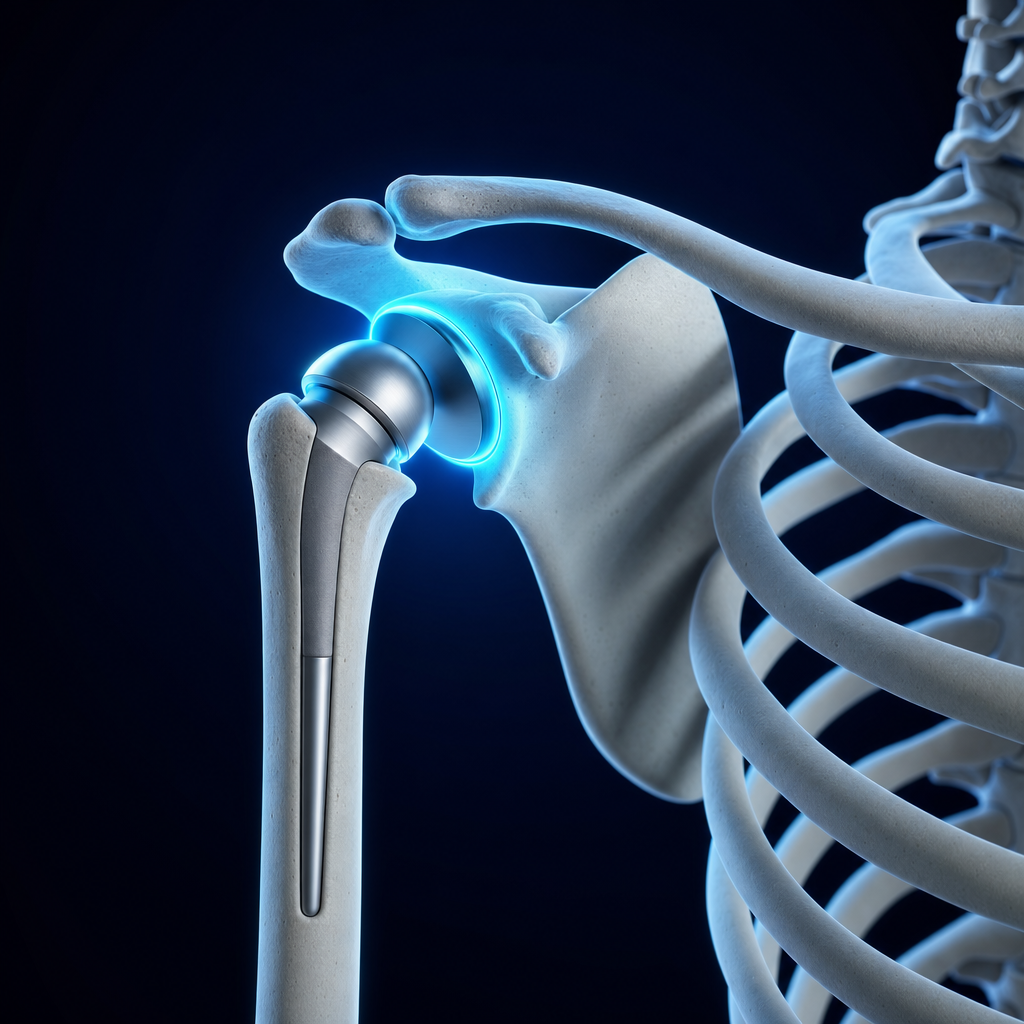
When surgery is indicated
- Severe cartilage wear from arthritis
- Arthritis accompanied by a rotator cuff tear
- A rotator cuff tear too extensive to suture
- A shoulder fracture too comminuted to restore to its original state
- Reduced range of motion and severe pain that make daily life difficult
Shoulder replacement — benefits
- Both the pain and the function of the shoulder joint can be addressed together.
- The shoulder does not bear body weight, so an implant there lasts relatively longer.
- An implant matched to the individual is used, according to the size of the joint and the state of the cartilage and tendons.
Process
How surgery proceeds
This is the shared pathway for the Surgery Center. Details for each procedure are covered in the consultation.
- 01
Precise diagnosis
MRI and CT are taken the same day and read by a radiologist that same day.
- 02
Surgical consultation
The operating surgeon explains in person why surgery is needed, what the alternatives are and how recovery is expected to go.
- 03
Surgery · inpatient care
The operation is performed in the annex theatre, and recovery is managed on the ward as the condition requires.
- 04
Rehabilitation · follow-up
After discharge the same team continues to follow your progress and rehabilitation in the outpatient clinic.