

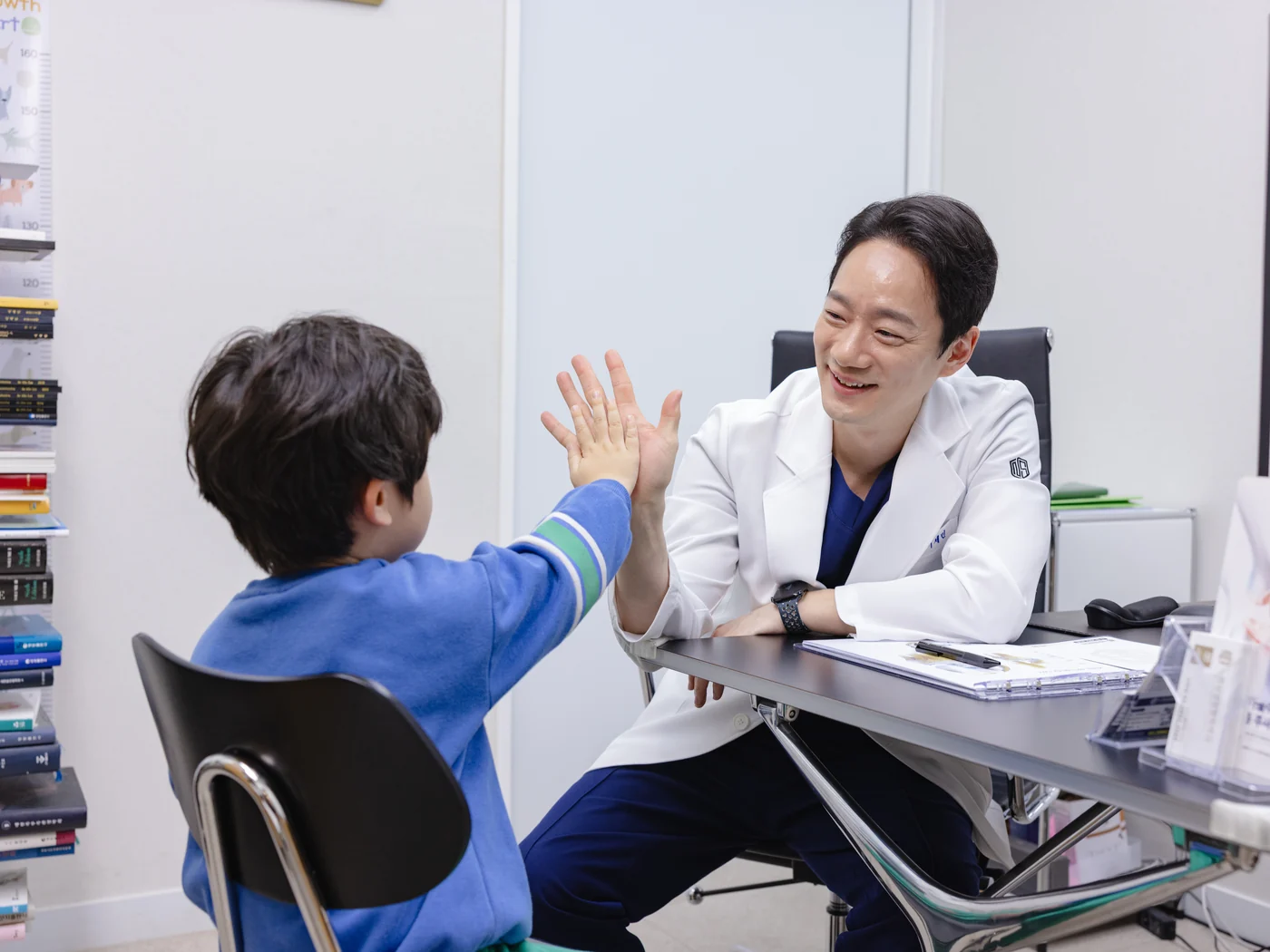
Pediatric Orthopedics
Pediatric center
Growth plate injuries
Growth plate injury
성장판이 다치면 이후 길이·각도 변형으로 이어질 수 있어 추적 관찰이 필요합니다.
소아정형 질환은 성장과 함께 자연히 좋아지는 경우와, 시기를 놓치면 교정이 어려워지는 경우가 함께 있습니다. 정확한 구분이 치료의 시작입니다.
Growth plate injuries FAQ
- How do you check whether a growth plate is injured?
- An X-ray shows fracture lines and separation around the growth plate; further imaging is added if needed. On X-ray the growth plate itself looks like a line, so telling normal anatomy from a fracture takes experience, and we sometimes compare with the other side.
- Does a growth plate injury stop a child growing?
- One injured site does not determine overall height. But if growth stops at the injured area, or only one side keeps growing, it can lead to a difference in the length of that bone or an angular deformity — so we follow up until growth is complete.
- How long do we need to keep monitoring?
- It depends on the extent of the injury and how much growth remains. A deformity may not show right after the injury but emerge as the child grows, so we compare images at regular intervals.
Pediatric Orthopedics care pathway
- 01
Consultation and examination
We check gait, posture, the pattern of pain and the growth history.
- 02
Imaging
X-ray shows bone alignment, the growth plates and bone age, and an Exbody posture scan checks balance and body alignment.
- 03
Choosing a direction
관찰·보조기·수술 중 성장 단계에 맞는 방법을 정합니다.
- 04
Growth follow-up
치료 후에도 성장에 따른 변화를 정기적으로 확인합니다.