


Biportal endoscopic cervical surgery
Spine surgery
Spine (neck · lower back) · 목 (경추)
Two openings, each under 1 cm, are made at the back of the neck. The endoscope goes through one and lights the site under magnification; the instruments go through the other and remove only what is pressing on the nerve. With a single-portal endoscope, seeing and working share one channel, which limits both the view and the angle of the instruments. Splitting them into two channels lets the two tasks be done separately, allowing a far finer approach.
Anesthesia, hospital stay and recovery time depend on the extent of injury and your general condition. The operating surgeon explains this after the consultation.
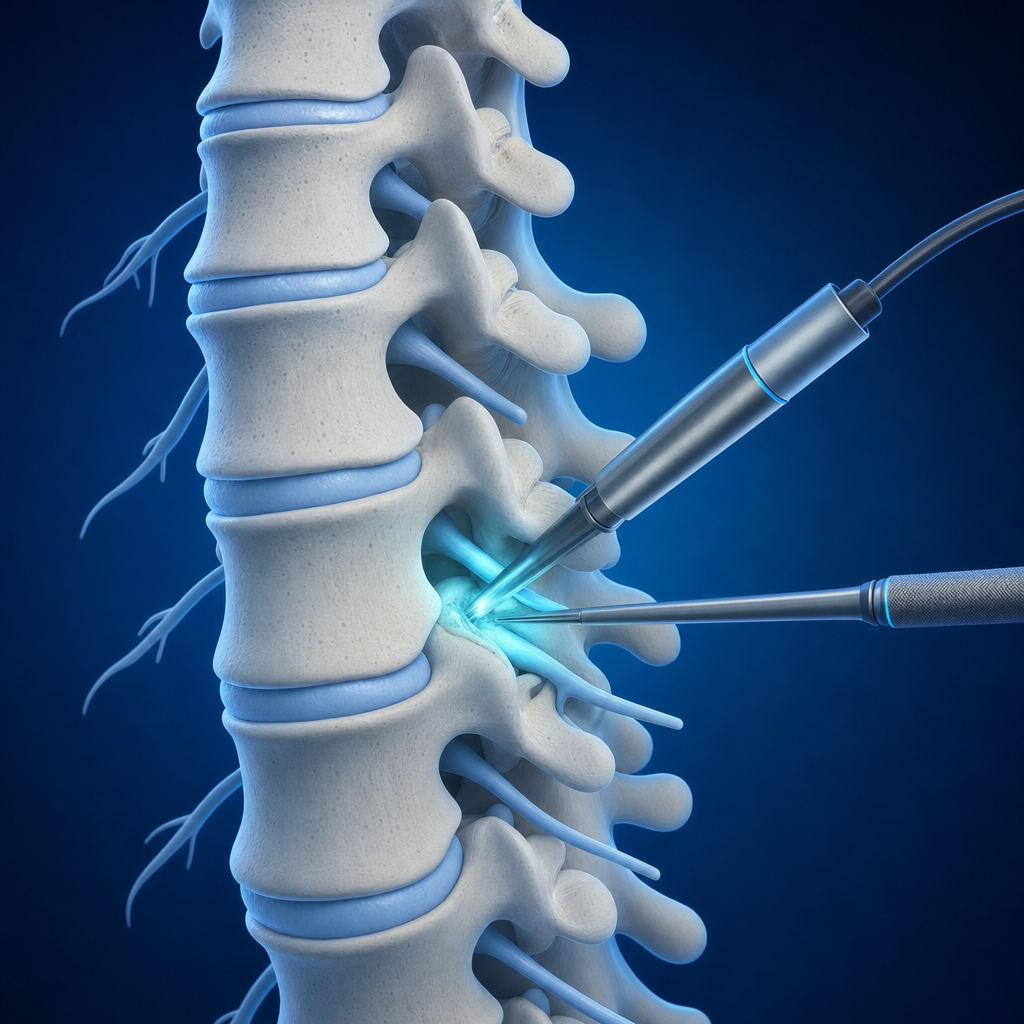
When surgery is indicated
- Nerve compression from cervical disc herniation or cervical stenosis
- Symptoms not controlled by medication, injections or physical therapy
- Older age or chronic illness making major surgery a burden
- A need to return to daily life quickly
Biportal endoscopic cervical surgery — benefits
- Because the two hands work independently, the angle of approach to the lesion is unrestricted and handling is stable.
- Only channels are made, without retracting the muscle widely, so muscle damage is minimal.
- With two incisions under 1 cm there is almost no bleeding and no transfusion is required.
- Continuous saline irrigation throughout the operation keeps the risk of infection and other complications low.
- The hospital stay is short, so you return to daily life sooner.
- It can be performed even in older patients with underlying conditions such as diabetes or hypertension.
Process
How surgery proceeds
This is the shared pathway for the Surgery Center. Details for each procedure are covered in the consultation.
- 01
Precise diagnosis
MRI and CT are taken the same day and read by a radiologist that same day.
- 02
Surgical consultation
The operating surgeon explains in person why surgery is needed, what the alternatives are and how recovery is expected to go.
- 03
Surgery · inpatient care
The operation is performed in the annex theatre, and recovery is managed on the ward as the condition requires.
- 04
Rehabilitation · follow-up
After discharge the same team continues to follow your progress and rehabilitation in the outpatient clinic.