


Biportal endoscopic spinal fusion
Spine surgery
Spine (neck · lower back) · 허리 (요추)
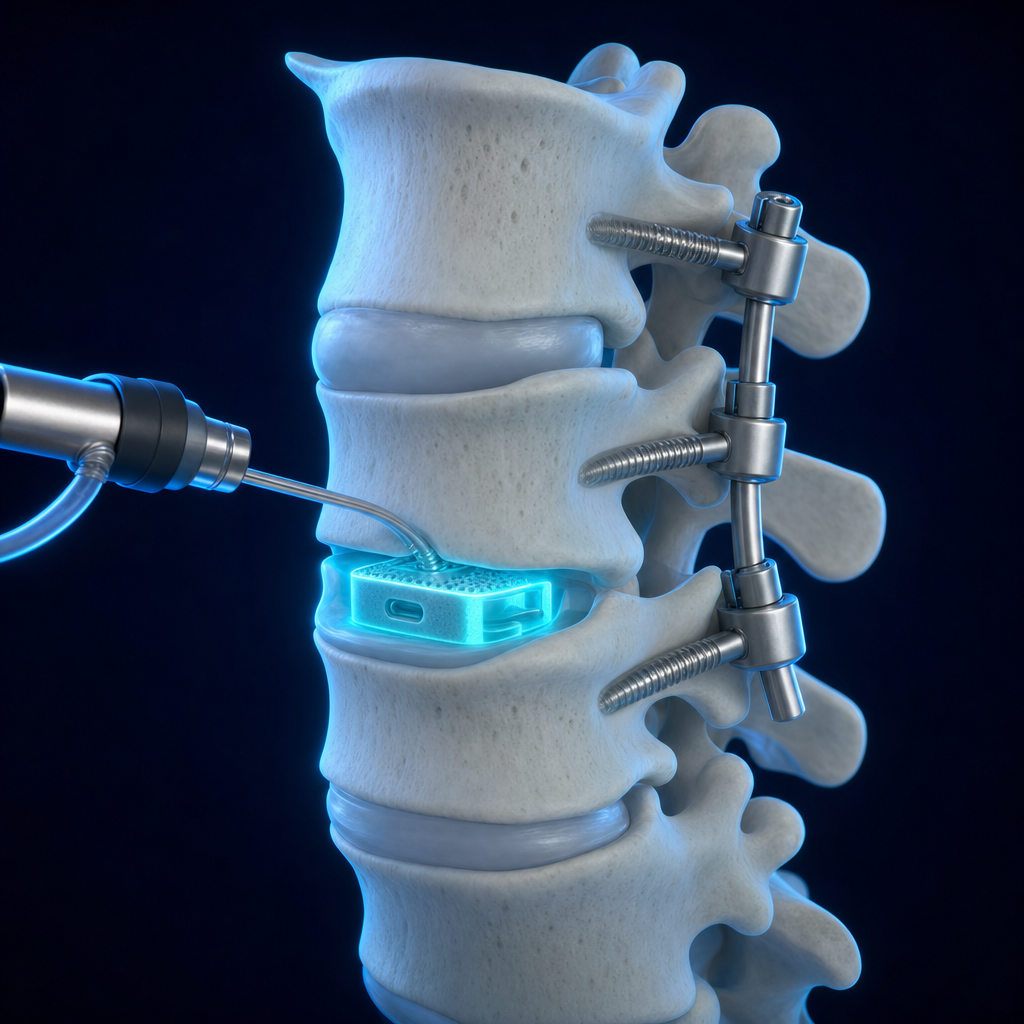
To fuse one lumbar segment, four tiny openings are made. Under endoscopic view the diseased bone, ligament and disc are removed to relieve nerve compression, and the unstable vertebrae are fixed with dedicated screws. It is a minimally invasive way of reducing the burden of conventional fusion, where a large incision caused considerable muscle damage.
Anesthesia, hospital stay and recovery time depend on the extent of injury and your general condition. The operating surgeon explains this after the consultation.
When surgery is indicated
- Disc herniation or spinal stenosis accompanied by segmental instability
- Symptoms not improving with non-surgical treatment
- Older age or chronic illness making open fusion a burden
Biportal endoscopic spinal fusion — benefits
- Working from a magnified high-definition image allows the screws to be placed precisely.
- Less damage to muscle and ligament means less pain and faster recovery.
- Bleeding is minimal, so transfusion is rarely needed.
- It can be performed without general anaesthesia.
- The small incision keeps the infection rate low.
Process
How surgery proceeds
This is the shared pathway for the Surgery Center. Details for each procedure are covered in the consultation.
- 01
Precise diagnosis
MRI and CT are taken the same day and read by a radiologist that same day.
- 02
Surgical consultation
The operating surgeon explains in person why surgery is needed, what the alternatives are and how recovery is expected to go.
- 03
Surgery · inpatient care
The operation is performed in the annex theatre, and recovery is managed on the ward as the condition requires.
- 04
Rehabilitation · follow-up
After discharge the same team continues to follow your progress and rehabilitation in the outpatient clinic.