


Cervical laminoplasty
Spine surgery
Spine (neck · lower back) · 목 (경추)
From the back of the neck, the lamina — the roof of the spinal canal — is opened and hinged back, creating room for the compressed spinal cord to move backwards. It is chosen when the cord is compressed across several levels rather than one or two.
Anesthesia, hospital stay and recovery time depend on the extent of injury and your general condition. The operating surgeon explains this after the consultation.
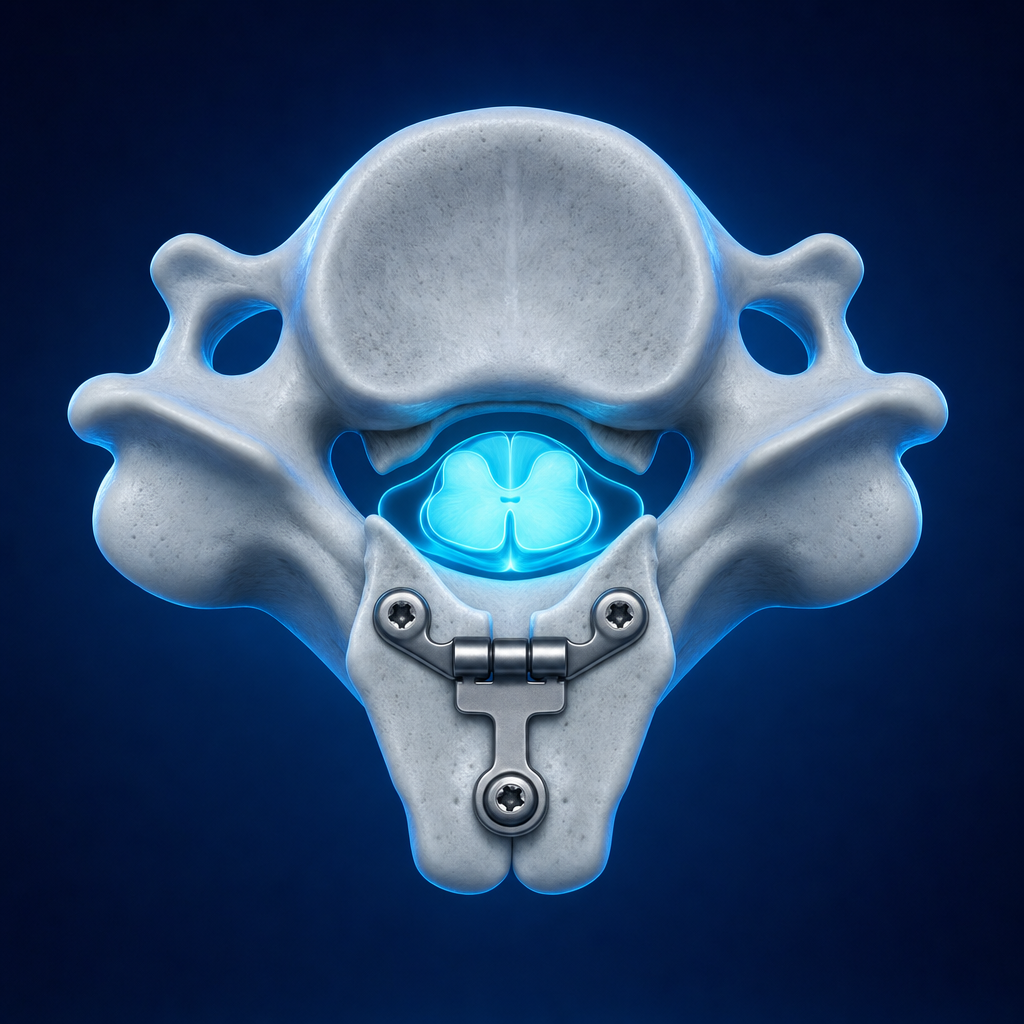
When surgery is indicated
- Cervical spinal stenosis spanning several segments
- Progressive spinal cord damage from ossification of the posterior longitudinal ligament
- Multilevel disease in which anterior fusion alone does not decompress adequately
Cervical laminoplasty — benefits
- No bone graft or segmental fixation is used, so neck movement can be preserved.
- Several levels can be decompressed in a single operation, with few after-effects.
Process
How surgery proceeds
This is the shared pathway for the Surgery Center. Details for each procedure are covered in the consultation.
- 01
Precise diagnosis
MRI and CT are taken the same day and read by a radiologist that same day.
- 02
Surgical consultation
The operating surgeon explains in person why surgery is needed, what the alternatives are and how recovery is expected to go.
- 03
Surgery · inpatient care
The operation is performed in the annex theatre, and recovery is managed on the ward as the condition requires.
- 04
Rehabilitation · follow-up
After discharge the same team continues to follow your progress and rehabilitation in the outpatient clinic.