


Anterior cruciate and anterolateral ligament reconstruction
Knee & hip surgery
Knee · hip
If a completely torn anterior cruciate ligament is left as it is, the knee becomes unstable, the surrounding cartilage tears as well, and arthritis follows. As much of the remaining ligament as possible is preserved, and the ligament is rebuilt using an autograft — the patient's own hamstring tendon from the same side — or an allograft, restoring the stability of the knee.
Anesthesia, hospital stay and recovery time depend on the extent of injury and your general condition. The operating surgeon explains this after the consultation.
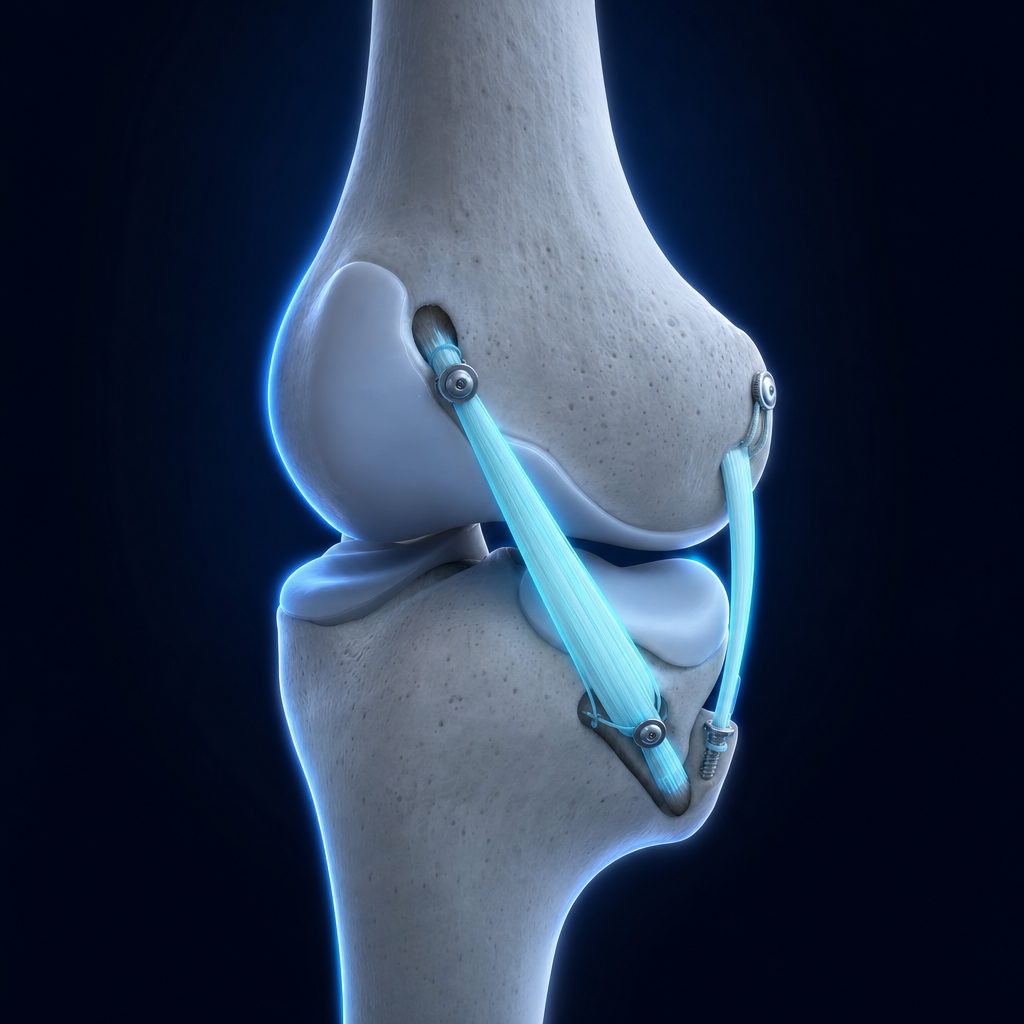
When surgery is indicated
- Acute complete tear of the anterior cruciate ligament
- Chronic injury that is now damaging the surrounding cartilage
Anterior cruciate and anterolateral ligament reconstruction — benefits
- Performed through a minimal incision, with little bleeding and pain and a quick recovery.
- Reconstructing without leaving the tear for long prevents secondary damage to surrounding tissue.
- Rehabilitation follows the surgery, restoring knee function quickly.
Why an autograft is used
- The re-tear rate is lower in young, active patients.
- The grafted tendon integrates quickly, so rehabilitation can start early.
- Being the patient's own tissue, there is no immune rejection.
- There is none of the disease transmission risk that an allograft can carry.
Process
How surgery proceeds
This is the shared pathway for the Surgery Center. Details for each procedure are covered in the consultation.
- 01
Precise diagnosis
MRI and CT are taken the same day and read by a radiologist that same day.
- 02
Surgical consultation
The operating surgeon explains in person why surgery is needed, what the alternatives are and how recovery is expected to go.
- 03
Surgery · inpatient care
The operation is performed in the annex theatre, and recovery is managed on the ward as the condition requires.
- 04
Rehabilitation · follow-up
After discharge the same team continues to follow your progress and rehabilitation in the outpatient clinic.