


Knee corrective osteotomy
Knee & hip surgery
Knee · hip
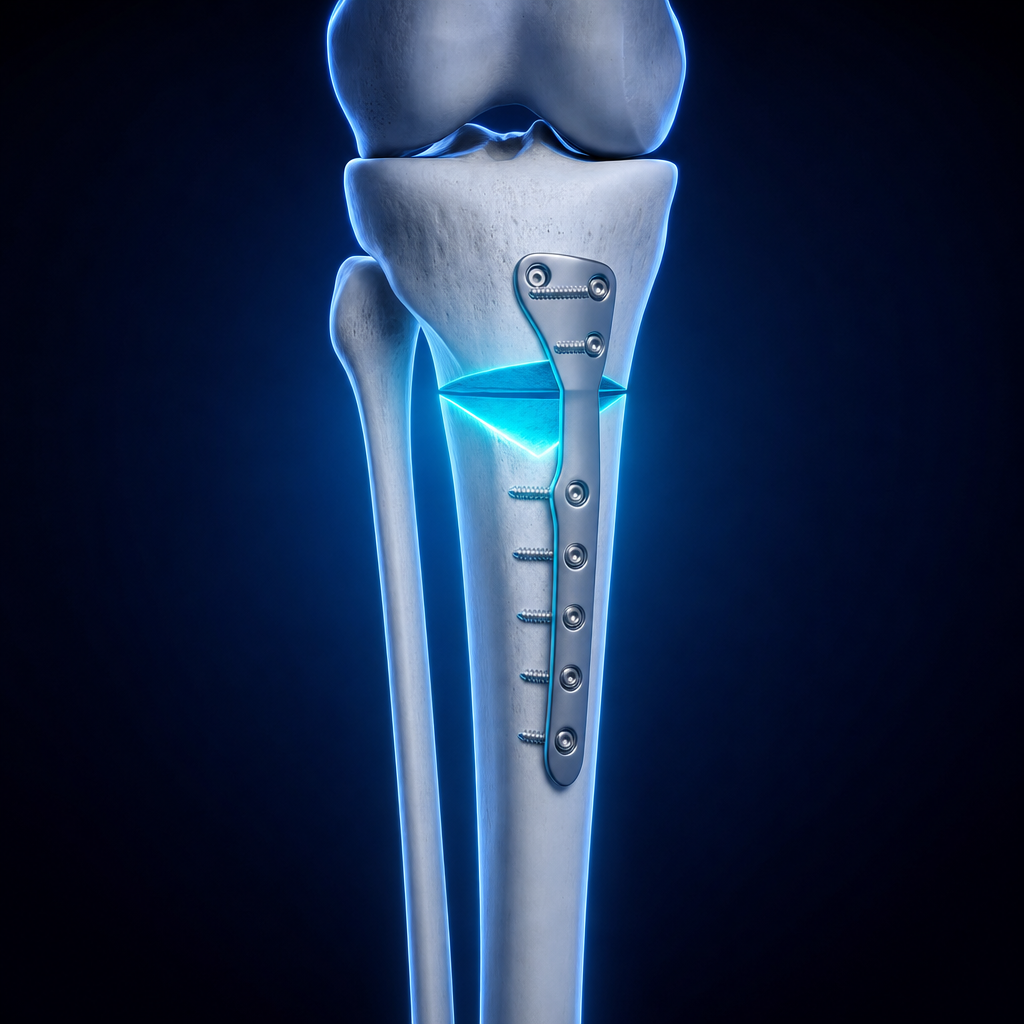
Between 60 and 70 per cent of body weight passes through the inner side of the knee. That is why arthritis wears the inner side first, and a bow-legged deformity increases the load there further. Cutting the tibia to correct the axis of the leg shifts the load onto the healthy outer cartilage and can stop the arthritis progressing.
Anesthesia, hospital stay and recovery time depend on the extent of injury and your general condition. The operating surgeon explains this after the consultation.
When surgery is indicated
- Arthritis limited to the inner (or outer) side of the knee
- Bow-leg or knock-knee deformity together with pain
- Leg deformity accompanied by a meniscal tear
- Asymmetry of the legs from deformity that makes daily life difficult
Knee corrective osteotomy — benefits
- Your own natural knee joint is preserved.
- Relieving the load on the inner side helps the cartilage recover.
- Joint replacement may be avoided, or at least postponed.
- Firm fixation with a locking plate and screws reduces complications such as fracture and allows early rehabilitation.
- It also has the effect of correcting the bowed leg.
Process
How surgery proceeds
This is the shared pathway for the Surgery Center. Details for each procedure are covered in the consultation.
- 01
Precise diagnosis
MRI and CT are taken the same day and read by a radiologist that same day.
- 02
Surgical consultation
The operating surgeon explains in person why surgery is needed, what the alternatives are and how recovery is expected to go.
- 03
Surgery · inpatient care
The operation is performed in the annex theatre, and recovery is managed on the ward as the condition requires.
- 04
Rehabilitation · follow-up
After discharge the same team continues to follow your progress and rehabilitation in the outpatient clinic.