


Total hip replacement
Knee & hip surgery
Knee · hip
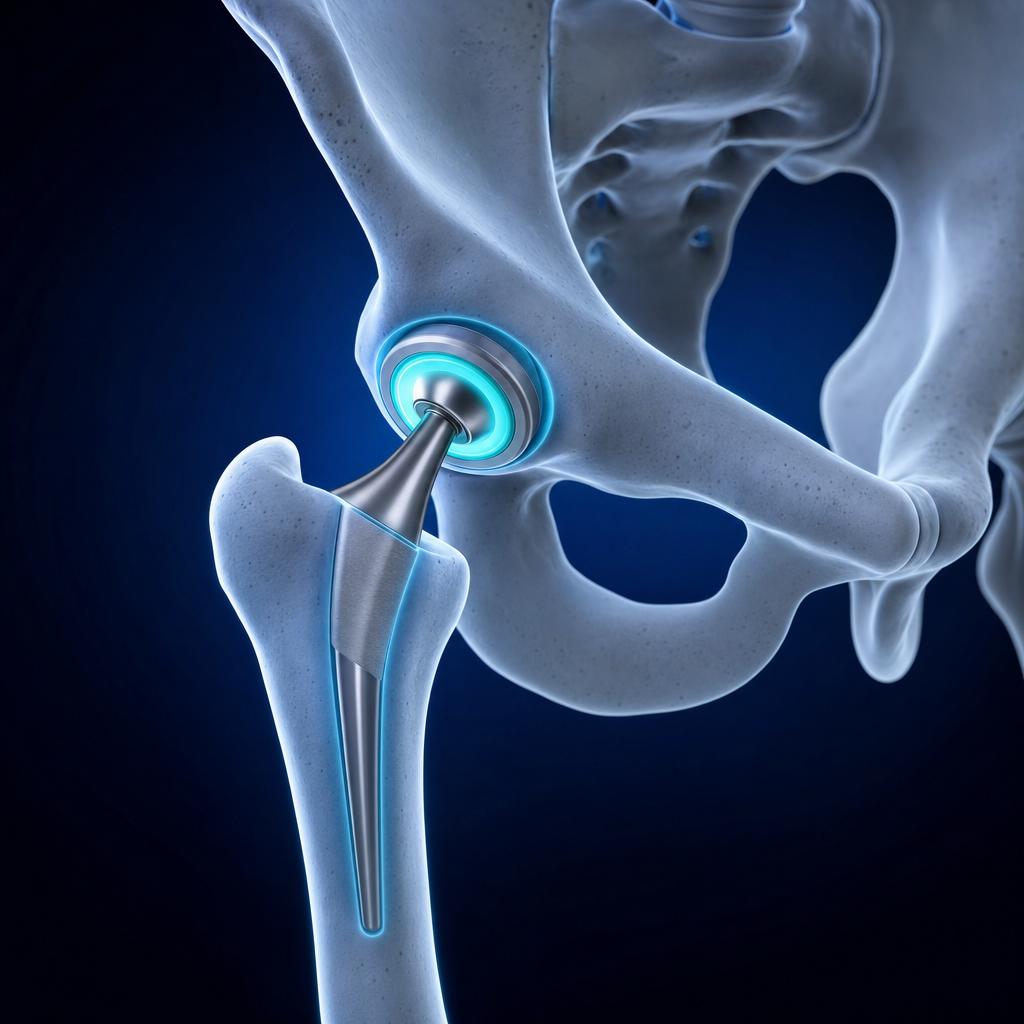
The damaged femoral head and the acetabulum of the pelvis are prepared as far as necessary, then a metal stem is placed on the femoral side and a ceramic bearing surface on the acetabular side to take over the role of the joint.
Anesthesia, hospital stay and recovery time depend on the extent of injury and your general condition. The operating surgeon explains this after the consultation.
When surgery is indicated
- Severe ongoing pain from joint destruction of various causes
- Osteoarthritis, rheumatoid arthritis or post-traumatic arthritis
- Avascular necrosis of the femoral head
- Proximal femoral fracture
- Congenital deformity, acetabular dysplasia or hip dislocation
Total hip replacement — benefits
- Everyday movements such as walking and sitting can be regained without pain.
- A joint structure collapsed by fracture or necrosis is rebuilt in a single operation.
- Walking practice and rehabilitation continue in stages after surgery.
Process
How surgery proceeds
This is the shared pathway for the Surgery Center. Details for each procedure are covered in the consultation.
- 01
Precise diagnosis
MRI and CT are taken the same day and read by a radiologist that same day.
- 02
Surgical consultation
The operating surgeon explains in person why surgery is needed, what the alternatives are and how recovery is expected to go.
- 03
Surgery · inpatient care
The operation is performed in the annex theatre, and recovery is managed on the ward as the condition requires.
- 04
Rehabilitation · follow-up
After discharge the same team continues to follow your progress and rehabilitation in the outpatient clinic.