


Meniscectomy and meniscal repair
Knee & hip surgery
Knee · hip
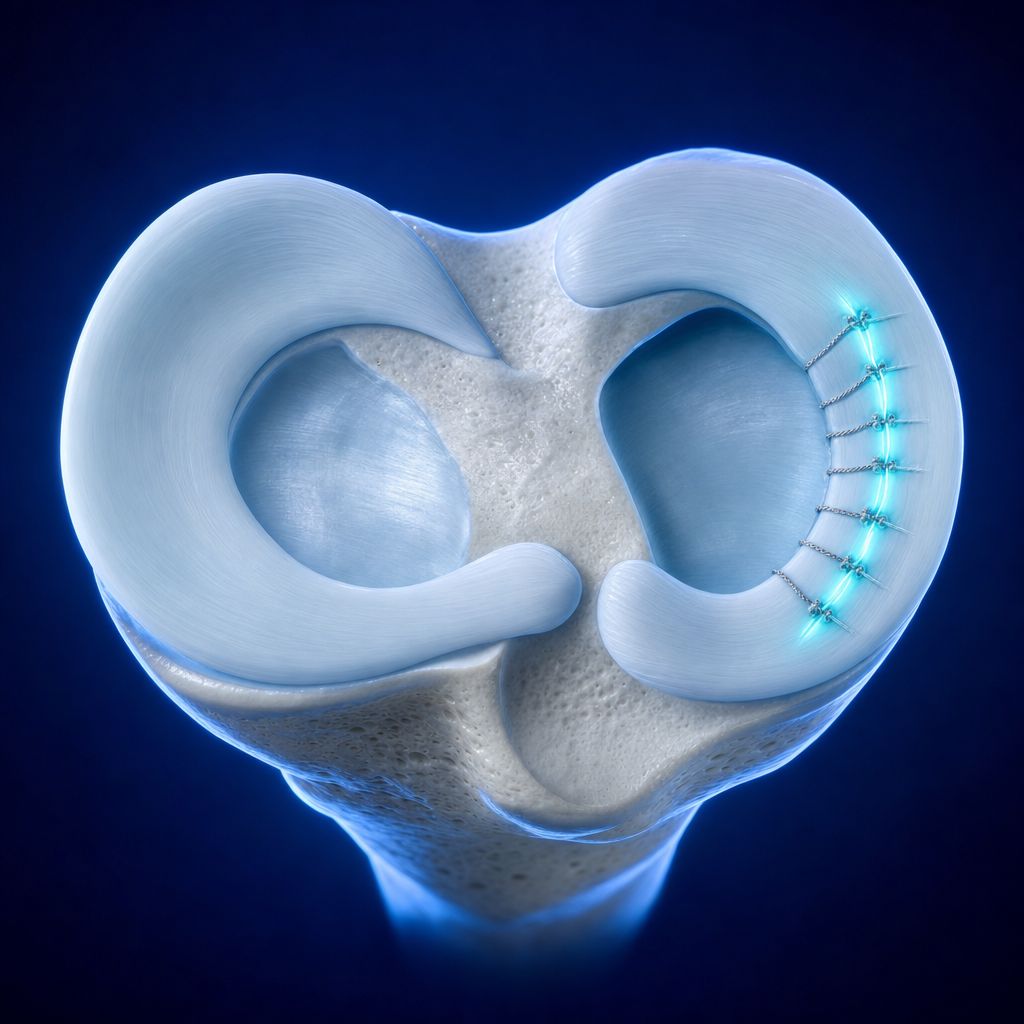
The meniscus has a poor blood supply, so once torn it rarely heals on its own. An arthroscope is inserted through a minimal incision to see the tear directly; where healing is possible the tear is sutured, and where it is not, only as much as necessary is trimmed away.
Anesthesia, hospital stay and recovery time depend on the extent of injury and your general condition. The operating surgeon explains this after the consultation.
When surgery is indicated
- Knee pain or locking caused by a meniscal tear
- Symptoms not improving with conservative treatment
Meniscectomy and meniscal repair — benefits
- Performed arthroscopically, leaving a small scar and allowing quick recovery.
- The tear is seen directly and the decision on whether it can be sutured is made on the spot.
How resection and repair differ
- Resection — where the site would not heal even if sutured, or the damage is long-standing, only the torn part is tidied away to stop the tear spreading and to reduce pain.
- Repair — where blood reaches and healing is possible, the tear is sutured to restore the meniscus to its original shape.
Process
How surgery proceeds
This is the shared pathway for the Surgery Center. Details for each procedure are covered in the consultation.
- 01
Precise diagnosis
MRI and CT are taken the same day and read by a radiologist that same day.
- 02
Surgical consultation
The operating surgeon explains in person why surgery is needed, what the alternatives are and how recovery is expected to go.
- 03
Surgery · inpatient care
The operation is performed in the annex theatre, and recovery is managed on the ward as the condition requires.
- 04
Rehabilitation · follow-up
After discharge the same team continues to follow your progress and rehabilitation in the outpatient clinic.