
Total knee replacement
Knee & hip surgery
Knee · hip
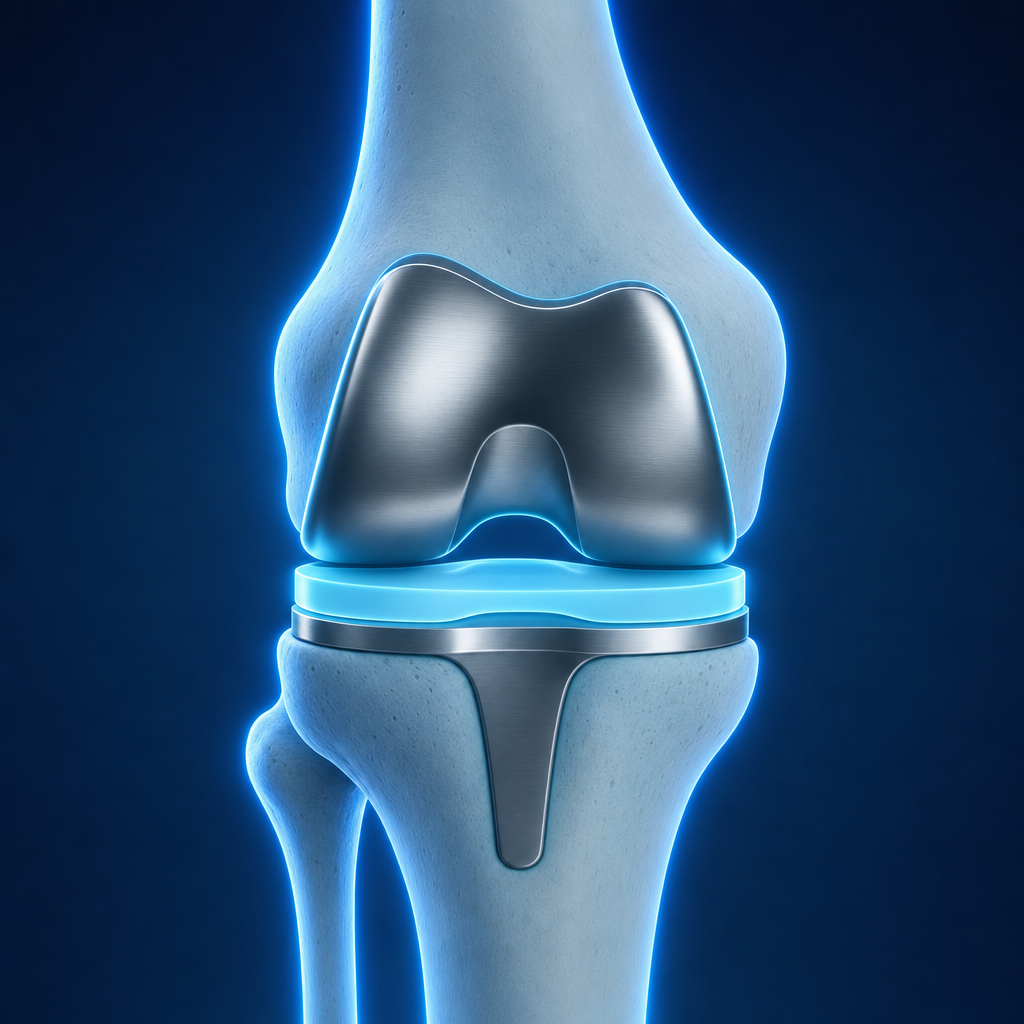
When the knee is damaged beyond what medication, injections and physical therapy can control, the damaged joint surfaces are removed and replaced with an implant. The aim is to reduce pain, regain the range of bending and straightening, and correct the bowed leg so that normal walking is possible.
Anesthesia, hospital stay and recovery time depend on the extent of injury and your general condition. The operating surgeon explains this after the consultation.
When surgery is indicated
- Pain that makes daily life difficult
- Pain on climbing stairs or after walking only a short distance
- A stiff knee that is hard to bend or straighten
- No benefit from taking medication or receiving injections
- A progressive inward bowing deformity of the knee
- Secondary complications arising from prolonged conservative treatment
Total knee replacement — benefits
- The damaged joint surface causing the pain is addressed directly.
- Leg alignment is corrected at the same time, making walking steadier.
- Walking and rehabilitation begin in stages from immediately after surgery, following the medical team's plan.
Process
How surgery proceeds
This is the shared pathway for the Surgery Center. Details for each procedure are covered in the consultation.
- 01
Precise diagnosis
MRI and CT are taken the same day and read by a radiologist that same day.
- 02
Surgical consultation
The operating surgeon explains in person why surgery is needed, what the alternatives are and how recovery is expected to go.
- 03
Surgery · inpatient care
The operation is performed in the annex theatre, and recovery is managed on the ward as the condition requires.
- 04
Rehabilitation · follow-up
After discharge the same team continues to follow your progress and rehabilitation in the outpatient clinic.
Watch the video
More on the Nowon Samsung TV channel.